
Asthma In Pregnancy
Introduction
Asthma occurs in 8-9% of pregnant women and allergic diseases are present in 20% of women of childbearing age. It is important for pregnant women with asthma to be monitored very closely because their asthma severity may change during pregnancy. In one third of women asthma symptoms worsen; in one third they improve; and in the remaining one third of pregnant women, the course of asthma stays the same. Exacerbations of asthma are very common in pregnancy partially because of physiologic/hormonal/mechanical changes and also secondary to discontinuation of medications because of concerns regarding side effects either by the mother or by the clinician. Pregnant women are also very susceptible to viral infections, especially influenza. Asthma exacerbations and poorly-controlled asthma have been associated with negative outcomes for the infant such as prematurity, increased perinatal mortality, and low birthweight. For pregnant moms, uncontrolled asthma is also a risk factor for pre-eclampsia. If asthma is kept well-controlled during pregnancy, the risks to the mother and baby are minimal!

Management of
Asthma During Pregnancy
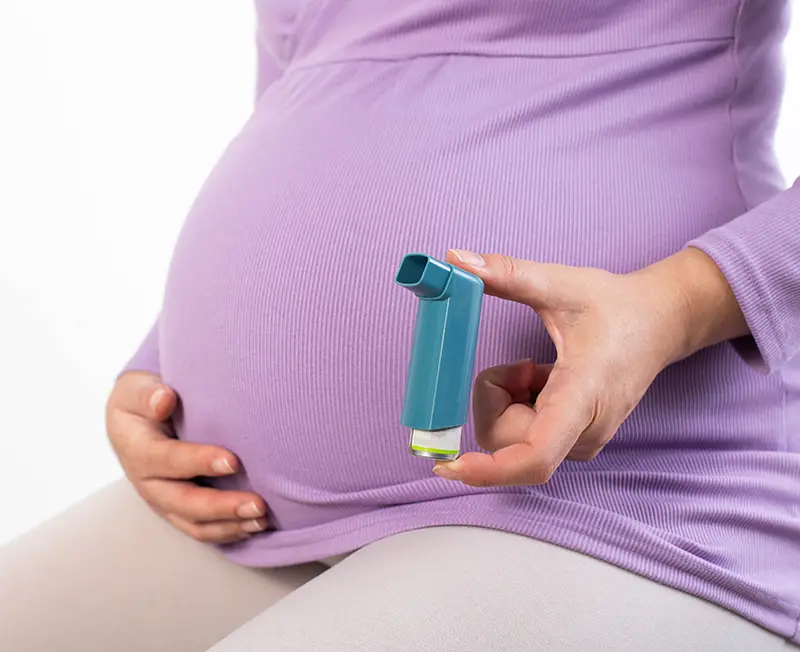
The management of asthma during pregnancy is very similar to the appropriate management of asthma in any non-pregnant patient, with the possible exception that the pregnant woman with asthma should be followed very closely by her asthma specialist. The components of care include the avoidance of trigger factors, taking appropriate medications, as well as education in multiple areas including what to do if an exacerbation should occur. Several goals should be pursued, including having few to no asthma symptoms, good exercise tolerance, minimal need for bronchodilators (e.g. albuterol), and prevention of exacerbations. Even though concerns have been raised about using any medication during pregnancy, the advantages of treating asthma in pregnancy appropriately with medications largely outweighs any potential for side effects. Poorly controlled asthma is a much greater risk to the baby and mother than any medication.
Management of other
allergic conditions during pregnancy
Pregnant women with asthma frequently have other allergic conditions including allergic rhinitis. There is also an increased risk for sinusitis. In some cases, nasal symptoms may begin during pregnancy because of the pregnancy-associated hormones. One name for this is “vasomotor rhinitis of pregnancy” (pregnancy rhinitis). Treatment of rhinitis during pregnancy depends on the cause and may include antihistamines, as well as preventative nasal sprays. Some women may be on allergy shots prior to pregnancy. The general recommendation would be to continue at the same dose the patient was on before becoming pregnant. Allergy shots are generally not started during pregnancy.