
Vocal Cord Dysfunction (VCD)
Introduction
Vocal Cord Dysfunction (VCD) occurs when the vocal cords (voice box) close inappropriately when a person is breathing. Most commonly, the vocal cords may close with inspiration. This condition may mimic asthma, though it may occur along with asthma. One of the main differences is that this constriction occurs involuntarily in the throat, whereas the constriction with asthma occurs within the tubes called bronchial tubes within the lungs. Although asthma and vocal cord dysfunction have many common triggers and overlapping symptoms, the management for each condition is very different. Click here to view a handout on VCD from the American Thoracic Society.
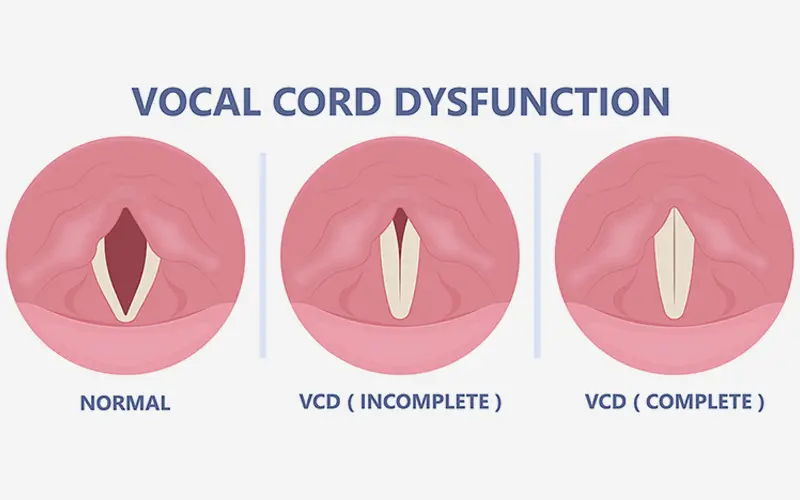

Symptoms & Diagnosis of
Vocal Cord Dysfunction (VCD)
Symptoms of VCD include:
- Difficulty breathing, especially with inspiration
- Throat tightness
- Absence of wheezing when breathing out
- Difficulty speaking
- Rapid appearance and disappearance of symptoms
- Symptoms triggered by odors
Diagnosis
Diagnosis can be challenging. The history, as well as a breathing test called a spirometry may be helpful. In some cases, and examination of the throat performed by an otolaryngologist called laryngoscopy may be needed.
Management of
Vocal Cord Dysfunction (VCD)
The management for VCD is very different from asthma includes one or more of the following:
- Breathing exercises
- Speech therapy
- In some cases, treatment of postnasal drip, and acid reflux (GERD)