
Eosinophilic Esophagitis (EoE)
Introduction
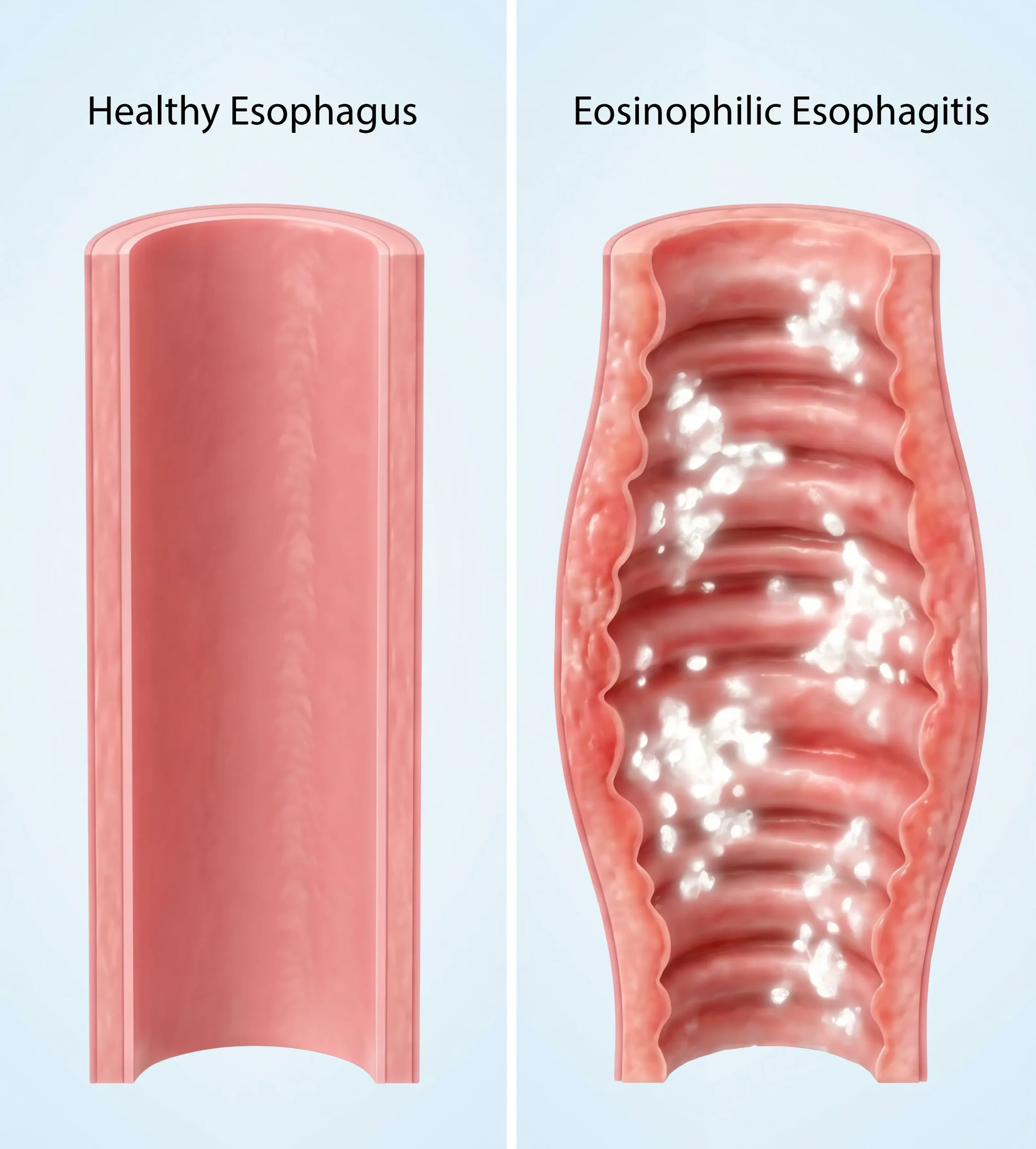
Eosinophilic esophagitis (EoE) is a recently recognized chronic illness that is associated with an increased number of an allergic type of white blood cell called an eosinophil within the esophagus. Normally, the esophagus should not have any eosinophils. Patients with EoE are more likely to have other allergic illnesses such as hay fever, asthma, food allergies, and eczema. Symptoms differ depending on the age group. Feeding disorders, vomiting, poor growth, and abdominal pain are more common in young children. Teens and adults typically present with difficulty swallowing, as well as blockages called food impactions that may need to be removed in a medical environment.

Symptoms & Diagnosis of
Eosinophilic Esophagitis
What are the symptoms of EoE
- Difficulty swallowing, especially with bread and meats
- Prolonged mealtimes, use of beverages or extra condiments to aid in swallowing
- Food impaction (food gets stuck in the esophagus)
- Nausea and vomiting
- Feeding refusal/intolerance
Diagnosis of EoE
The diagnosis of EoE needs to be made with the help of a GI doctor through a procedure called an endoscopy. In this procedure, performed under sedation, an endoscope is used to examine the esophagus and take biopsies that are then observed under a microscope.
Treatment of
Eosinophilic Esophagitis
EoE is a chronic condition and lifelong treatment may be required. Treatment may consist of one or more of the following:
- Acid Supressors: Medicines called proton pump inhibitors are almost always the initial step in treating EoE. Some examples include Prilosec (omeprazole) and Prevacid (lansoprazole). These medications may have an anti-inflammatory effect above and beyond their abilities to suppress acid.
- Food Elimination Diet: Because EoE is often triggered by an inappropriate response to different food allergens, an empiric elimination diet in which common known food triggers can be avoided. Dairy and wheat are the most common triggers. If there is an inadequate response, then additional foods can be eliminated.
- Swallowed Steroids: oral budesonide (Eohilia) or swallowed fluticasone (administered via the asthma inhaler previously known as Flovent) are often used to treat the esophageal inflammation.
- Dupixent: an injectable biologic medication approved down to 1 year of age that specifically targets eosinophilic/type 2 inflammation. Dupixent usually leads to significant improvement in symptoms without the need for any dietary modification.